https://en.wikipedia.org/wiki/Imperialism

Summerian cylinder seal, ca. 2500–2350 BC. Early Dynastic IIIb.

The "Ram in a Thicket" statue found at the Royal Cemetery of Ur contains traded materials

One fragment of the Stele of the Vultures showing king Eannatum as a military charioteer. Dated to c. 2450 BC. Currently in the Louvre Museum.
 Statue of a male figure, recovered from Tell Asmar
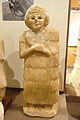 Statue of a female figure, recovered from Khafajah
 Statue of a kneeling male figure holding a vase, recovered from Tell Agrab
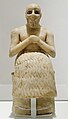 Statue of Ebih-Il, recovered from Mari (ED IIIb)
 Stone statue of Kurlil, Early Dynastic III, 2500 BC Tell Al-'Ubaid.
 Piece of inlay made of nacre, inscribed with the name of Akurgal, son of Ur-Nanshe of Lagash (currently in the Louvre).
 Alabaster bull inlay. From southern Iraq, Early Dynastic Period, c. 2750-2400 BC. The Burrell Collection, Glasgow, UK.
 Portrait of Naram-Sin, with inscription in his name.
 Akkadian Empire soldiers on the Victory Stele of Naram-Sin, circa 2250 BC
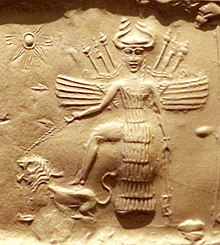 Goddess Ishtar on an Akkadian seal, 2350–2150 BC.
 Head of a King, c. 2650–2600 BC, Brooklyn Museum.
The earliest representations of Egyptian Kings are on a small scale.
From the Third Dynasty, statues were made showing the ruler life-size;
this head wearing the crown of Upper Egypt even surpasses human scale.[6]
Head of a King, c. 2650–2600 BC, Brooklyn Museum.
The earliest representations of Egyptian Kings are on a small scale.
From the Third Dynasty, statues were made showing the ruler life-size;
this head wearing the crown of Upper Egypt even surpasses human scale.[6] Statue of Menkaure with Hathor and Anput from the Egyptian Museum in Cairo. Demonstrates a group statue of graywacke with Old Kingdom features and proportions.[20]
 The Bassetki Statue, found in Dohuk Governorate, Iraqi Kurdistan, dated to the reign of Naram-Sin (c.2254–2218) with an inscription mentioning the construction of a temple in AkkadAssyrian soldier in the Achaemenid army circa 470 BC, Xerxes I tomb
 Winged figure near a sacred tree; 9th century BC; from the palace of Ashurnasirpal II (Nimrud, Iraq); Hermitage Museum (Sankt Petersburg, Russia)
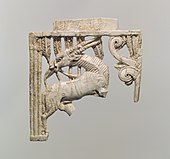 Openwork furniture plaque with a grazing oryx in a forest of fronds; 9th–8th century BC; ivory; 12.7 x 11.91 x 1.09 cm; Metropolitan Museum of Art (New York City)
 Cylinder seal and with deities, on of them being on a winged lion; 8th–7th century BC; quartz, crypto-crystalline; 4.09 cm; Metropolitan Museum of Art
 Relief from Assyrian capital of Dur Sharrukin, showing transport of Lebanese cedar; 713-716 BC; height: 2.41 m, width: 38 cm; Louvre
 Relief with a winged man; 713-706 BC; height: 3.3 m, width: 2.1 m; from Palace of King Sargon II; Louvre

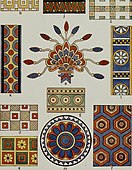 Assyrian ornaments and patterns, illustrated in a book from 1920

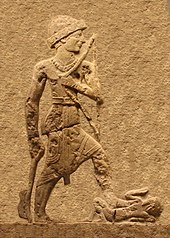 Iddin-Sin, King of the Simurrum. The Simurrum, a mountain tribe, were vanquished by the armies of the Third Dynasty of Ur, circa 2000 BC (detail)
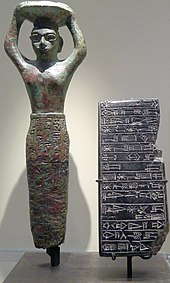 An architectural foundation-nail figurine depicting king Amar-Sin himself carrying the builder's wicker traybasket.[11] His name translates to 'immortal moon-god'.
 Cylinder seal of King Shulgi, Louvre Museum.
 The last king of the Ur III dynasty King Ibbi-Sin (c.2028–2004 BC) enthroned, with standing goddess.[21]
 Statuette of Pepy I (ca. 2338-2298 B.C.E.) wearing a nemes headdress Brooklyn Museum
 Den
Den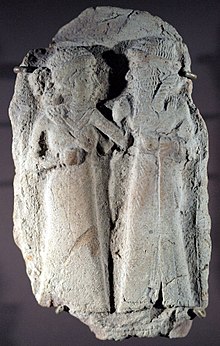 Terracotta of a couple, probably Inanna and Dumuzi, Girsu, Amorite period, 2000-1600 BC. Louvre Museum AO 16676.
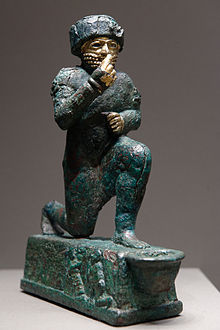 "The Worshipper of Larsa", a votive statuette dedicated to the god Amurru for Hammurabi's life, early 2nd millennium BC, Louvre
 Limestone Statue of the Steward Mery, Ancient Egypt 11th Dynasty, First Intermediate Period
 Cycladic idol, Parian marble; 1.5 m high (largest known example of Cycladic sculpture. 2800–2300 BC
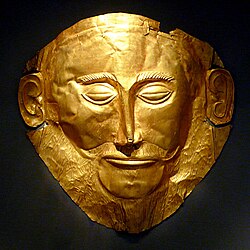 Gold Mask of Agamemnon, Late Helladic 16th century BC.
 The Dendra panoply, Mycenaean armour, 1400 BC.
 Ivory head, Late Helladic 1250–1180 BC.
 Statue of Ebih-Il. (25th century BC)
 The lion of Mari. (22nd century BC)
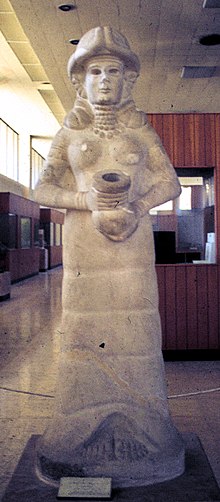 Goddess of the vase. (18th century BC)
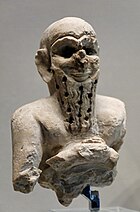 A Mariote from the second kingdom. (25th century BC)
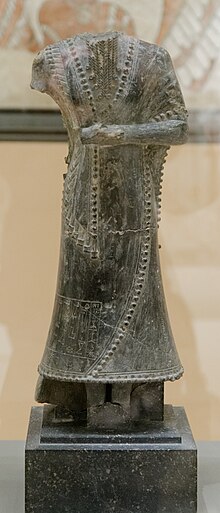 Iddin-El statue. (c. 2090 BC)
 Puzur Ishtar, Shakkanakku of Mari. (c. 2050 BC)
 A Mariote woman. (25th century BC)
 Tura Dagan, Shakkanakku of Mari. Originally from Mari (c. 2071–2051 BC).
-
 Bust of Melqart at the National Museum of Denmark
 Figurine of a Deity from Tyre, 7th c. BCE, National Museum of Beiru
 Figurines of Musicians from Tyre, Iron Age II, National Museum of Beirut
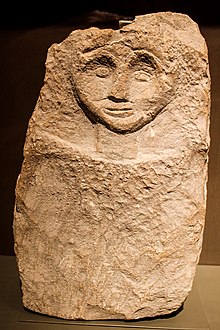 Stela from the Phoenician necropolis of Tyre, National Museum of Beirut
 Seated woman with tiara, uncovered at Tyre, 6th c. BCE, Louvre Museum
 Bearer of a duck offering uncovered in Tyre area, exhibited at Beirut Airport
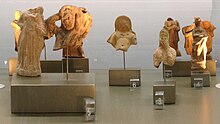 Hellenistic figurines from Tyre on display at Beirut Intl. Airport, 2019
 Marble bust of Septimius Severus from Tyre, National Museum of Beirut
 "UNDER ARMOUR": Marble statue of Hadrian from Tyre at the National Museum of Beirut
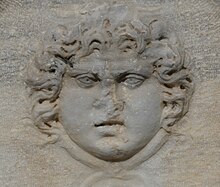 Relief on a sarcophagus in the Roman-Byzantine necropolis of Al Bass
 Roman relief at the necropolis
 Relief at the Al Mina site
 From the Necropolis, 440 CE: "possibly the oldest fresco of the Virgin Mary worldwide."[55] (National Museum)
 Persian style bull protome found in Sidon gives testimony of the Aecheminid rule and influence. Marble, 5th century BC
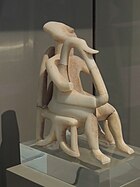 Harp player, example of Cycladic art, at the National Archeological Museum, Athens
 Kneeling Bull with Vessel. Kneeling bull holding a spouted vessel, Proto-Elamite period, (3100–2900 BC)[14] Metropolitan Museum of Art, ref. 66.173
 Orant figure, Susa IV, 2700–2340 BC.
 Silver cup with linear-Elamite inscription on it. Late 3rd millennium BC. National Museum of Iran.
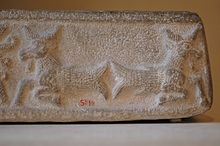 An
ornate design on this limestone ritual vat from the Middle Elamite
period depicts creatures with the heads of goats and the tails of fish
(1500–1110 BC).
An
ornate design on this limestone ritual vat from the Middle Elamite
period depicts creatures with the heads of goats and the tails of fish
(1500–1110 BC). Stele of Untash Napirisha, king of Anshan and Susa. Sandstone, ca. 1340–1300 BC.
 Relief
of a woman being fanned by an attendant while she holds what may be a
spinning device before a table with a bowl containing a whole fish
(700–550 BC).
Relief
of a woman being fanned by an attendant while she holds what may be a
spinning device before a table with a bowl containing a whole fish
(700–550 BC).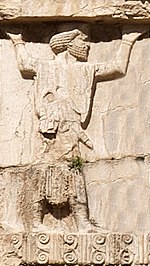 Elamite soldier in the Achaemenid army circa 470 BCE, Xerxes I tomb relief.
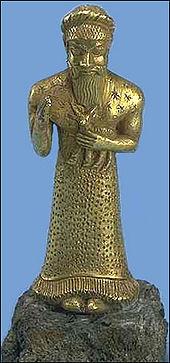 Golden statuette of a man (probably a king) carrying a goat. Susa, Iran, c.1500–1200 BC (Middle Elamite period)
ššina, one of the last kings of Elam circa 522 BC was toppled, enchained and killed by Darius the Great. The label over him says: "This is ššina. He lied, saying "I am king of Elam.""[41]  Statue of Napirasu
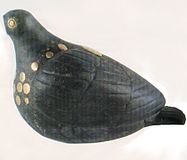 A 4.5 inch long lapis lazuli dove is studded with gold pegs. Dated 1200 BC from Susa, a city later on shared with the Achaemenids.
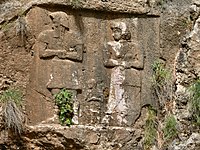 Elamite reliefs at Eshkaft-e Salman. The picture of a woman with dignity shows the importance of women in the Elamite era.[opinion]
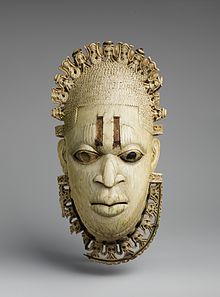 Benin ivory mask, Iyoba, 16th-century Nigeria
 Tirthankara lord Neminatha from Akota Bronzes, 7th century
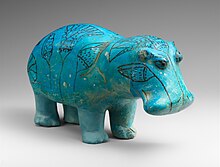 William the Hippopotamus is a mascot of the Met
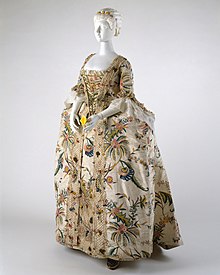 Robe à la française 1740s, as seen in one of the exhibits at the Costume Institute.


.jpg)


.jpg)

_(14741970056).jpg)
.JPG)

.jpg)


.jpg)


Comments
Post a Comment