https://en.wikipedia.org/wiki/Frying_pan_(NAMA_4974)

The Sleeping Lady of Ħal Saflieni, National Museum of Archaeology, Valletta
 The bronze statue of Zeus or Poseidon, the Artemision Bronze in room 15
 Varvakeios Athena, replica of Athena Parthenos
 Statue of Asklepius. Roman copy (c.160 AD), from a 4th-century BC Greek original
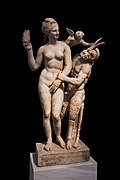 Aphrodite,Pan and Eros complex.
 The Antikythera mechanism (main fragment) in room 38
 The philosopher's head from the Antikythera wreck
 Bronze pitcher
 Egyptian funerary mask
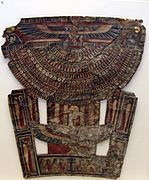 Egyptian Necklace
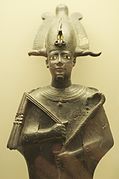 Statue
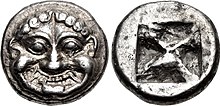 The earliest coinage of Athens, circa 545-525/15 BC
 The Caryatides (Καρυάτιδες), or Maidens of Karyai, as displayed in the new Acropolis Museum. One of the female sculptures was taken away from the Erechteion by Lord Elgin and is kept in the British Museum.
 Armenian soldier of the Achaemenid army, circa 470 BC. Xerxes I tomb relief.
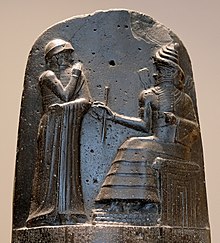 Hammurabi (standing), depicted as receiving his royal insignia from Shamash (or possibly Marduk). Hammurabi holds his hands over his mouth as a sign of prayer[7] (relief on the upper part of the stele of Hammurabi's code of laws).
 Old Babylonian Cylinder Seal, hematite, The king makes an animal offering to Shamash. This seal was probably made in a workshop at Sippar.[21]
 Man and woman, Old-Babylonian fired clay plaque from Southern Mesopotamia, Iraq
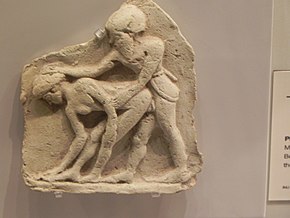 Erotic terracotta votive plaque dating to the Old Babylonian Period (c.
1830 BC — c. 1531). Representations of this type were once interpreted
as evidence for a "sacred marriage" ritual in which the king would take
on the role of Dumuzid and engage in sexual intercourse with the
priestess of Inanna.[27][36][28][37] This interpretation is now generally seen as a misinterpretation of Sumerian literary texts.[29]
Erotic terracotta votive plaque dating to the Old Babylonian Period (c.
1830 BC — c. 1531). Representations of this type were once interpreted
as evidence for a "sacred marriage" ritual in which the king would take
on the role of Dumuzid and engage in sexual intercourse with the
priestess of Inanna.[27][36][28][37] This interpretation is now generally seen as a misinterpretation of Sumerian literary texts.[29]


_(3470740119).jpg)


.jpg)
.jpg)


_2.jpg)


Ancient Sumerian cylinder seal impression showing Dumuzid being tortured in the Underworld by the galla demons

Terracotta plaque dating to the Amorite Period (c. 2000-1600 BC) showing a dead god (probably Dumuzid) resting in his coffin

Akkadian cylinder seal impression from Girsu (c. 2340 - 2150 BC) showing a mythological scene.[65] The figure in the center appears to be a god, perhaps Gilgamesh, who is bending the trunk of a tree into a curve as he chops it down.[65] Underneath the tree, a god ascending from the Underworld, possibly Dumuzid, hands a mace-like object to a goddess,[65] possibly Inanna or one of Dumuzid's female relatives.

In Ezekiel 8:14, the prophet Ezekiel, shown here in this illustration from 1866 by Gustave Doré, witnesses women mourning the death of Tammuz outside the Second Temple.[77][78][79]

Silver tetradrachm from Troy with head of Athena, c. 165–150 BC

Sophia Schliemann wearing the "Jewels of Helen," a famed piece in the Priam's Treasure collection.


Comments
Post a Comment