][
 Striding figure, Proto-Elamite or Mesopotamian (3000-2800 BC).[7]
 Kneeling Bull with Vessel. Kneeling bull holding a spouted vessel, Proto-Elamite period (3100-2900 BC). Metropolitan Museum of Art[8]
 The Proto-Elamite Guennol Lioness, c.3000-2800 BC, 3.5 inches high
 Northwest Caucasus caftan, 8-10th century, from the region of Alania.
 Hierakonpolis ivory objects

Khafre Enthroned Amenemhat III, the last great ruler of the Middle Kingdom
 A stone statue of Hatshepsut
 Alexander the Great, 100 BC – 100 AD, 54.162,
 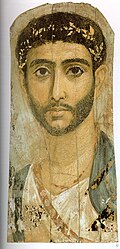 The Fayum mummy portraits epitomize the meeting of Egyptian and Roman cultures
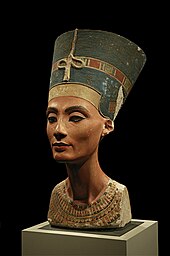 The Bust of Nefertiti, by the sculptor Thutmose, is one of the most famous masterpieces of ancient Egyptian art.
 The ancient Egyptians maintained a rich cultural heritage complete with feasts and festivals accompanied by music and dance.
 The Ka statue provided a physical place for the Ka to manifest.
 Pharaohs' tombs were provided with vast quantities of wealth, such as the golden mask from the mummy of Tutankhamun.
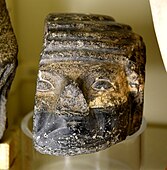 Damaged basalt head of a foreigner, from a door socket. Early Dynastic Period, 1st to 2nd Dynasties. From Thebes, Egypt.
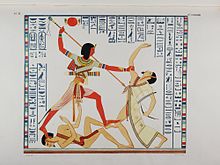 Hieroglyphs and depictions transcribed by Ippolito Rosellini in 1832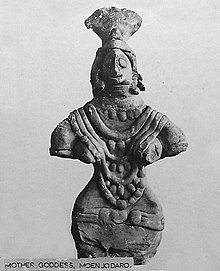
Picture of original GoddessMohenjo-daro "The Priest-King", a seated stone sculpture at the National Museum, Karachi
 Harappan burnished and painted clay ovoid Vase, with round carnelian beads. (3rd Millennium-2nd Millennium BCE)
 The controversial Lohanipur torso. The discoverer, Madho Sarup Vats, claimed a Harappan date, but Marshall dated the statuette to Gupta period.[16]
 Wax forms for casting bronze statues for new Tibetan monastery near Kullu, H.P., India
 Detailed 9th century bronze casting by lost wax in form of a coiled snake, Igbo-Ukwu, Nigeria
 Sculpture from the Ife state using a lost-wax casting technique, Nigeria, late 11th-14th century.
 This bronze piece entitled Lazy Lady, by the sculptor Rowan Gillespie was cast using the lost-wax process.
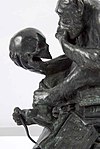 Hugo Rheinhold's Affe mit Schädel is cast out of bronze using the lost-wax process.
 A wax model is sprued with vents for casting metal and for the release of air, and covered in heat-resistant material.
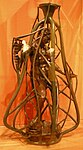 A cast in bronze, still with spruing
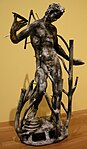 A bronze cast, with part of the spruing cut away
 A nearly finished bronze casting. Only the core supports have yet to be removed and closed
 Illustration of stepwise bronze casting by the lost-wax method
 The Blätterbrunnen of 1976 by Emil Cimiotti, as seen 2014 in the city center of Hanover, Germany. A lost-wax method

Female figure from Mehrgarh; c.3000 BCE;[41] terracotta; height: 9.5 cm (33⁄4 in). Part of the Neolithic ‘Venus figurines’ tradition, this figure's abundant breasts and hips suggest links to fertility and procreation. Her hair was probably painted black; brown ochre would have covered the body, and her necklace was probably yellow. Her seated posture, with arms crossed under the breasts, is common throughout the region, as is her extravagant hairstyle Seated Mother Goddess ,3000–2500 BC. Mehrgarh.[47]
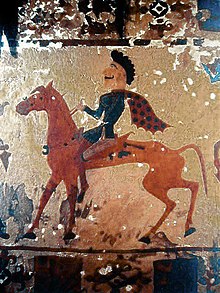 Depiction of a mounted warrior from the Pazyryk burials, c. 300 BCE
 The Venus of Malta
 The Mare de Déu de la Mercè statue on the Basílica de la Mercè
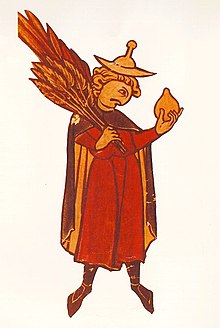 This figure, in a detail of a medieval Hebrew calendar, reminded Jews of the palm branch (Lulav), the myrtle twigs, the willow branches, and the citron (Etrog) to be held in the hand and to be brought to the synagogue during the holiday of Sukkot, which occurs in autumn.https://en.wikipedia.org/wiki/Anno_Lucis
Part of a series on Freemasonry 

Stele of Ushumgal, 2900-2700 BC. Probably from Umma.[12]
Gold helmet of Meskalamdug, ruler of the First Dynasty of Ur, circa 2500 BC, Early Dynastic period III.
Detail of a Sumerian statuette for "lugal" (king) Lugaldalu of Adab.
Statuette of a man, Early Dynastic Period II, circa 2700 BC, Khafadje. Louvre Museum, reference AO 188886


 Hierakonpolis ivory objects

.jpg)


.jpg)


_Mehrgarh_style.jpg)


.jpg)


Comments
Post a Comment