asd

Roman cast terracotta of ram-horned Jupiter Ammon, a form of Zeus 1st century AD. Gods, could sometimes be transferred or adopted by many civilizations, and then adjusted for local conditions.

Pharaohs of Nubia

Standing Greek-Buddha, Gandhara, 1st century AD.

Terracotta Warriors from the time of Qin Shi Huang

Painting of Murong Xianbei archer, in Late Antiquity, nomads across Eurasia, began to use the stirrup. Horse riding warriors could be devastating in combat.

Wooden statue of the scribe Kaaper, 5th or 4th dynasty of the Old Kingdom, from Saqqara, c. 2500 BC

Male deity pouring a life-giving water from a vessel. Facade of Inanna Temple at Uruk, Iraq. 15th century BC. The Pergamon Museum

Female deity pouring a life-giving water from a vessel. Facade of Inanna Temple at Uruk, Iraq. 15th century BC. The Pergamon Museum
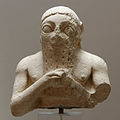 Lugal-kisal-si, king of Uruk
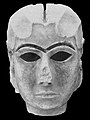 Mask of Warka
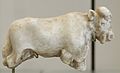 Bull sculpture, Jemdet Nasr period, c. 3000 BC
 Ancient Assyrian statue currently in the Louvre, possibly representing Gilgamesh
 Plan of a real estate of the city of Umma, with indications of the surfaces of the parts. Third Dynasty of Ur, Le Louvre.
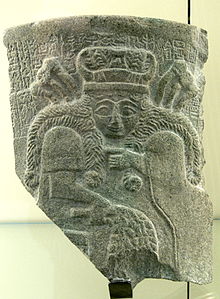 Goddess Nisaba with an inscription of Entemena, ruler of Lagash (2430 BCE), steatite, Vorderasiatisches Museum Berlin
 The Charioteer of Delphi was dedicated to the god Apollo in 474 BC by the tyrant of Gela in commemoration of a Pythian racing victory at Delphi.
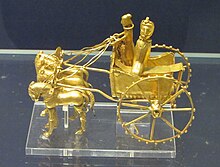 A golden chariot made during Achaemenid Empire (550–330 BCE).
 Bronze Chinese charioteer from the Warring States period (403–221 BCE).


Comments
Post a Comment